
Hands & the origin of samsara
Epistemic status: speculative thesis on a fun vasocomputation tangent. For original context, see Principles of Vasocomputation (thread/video).
I. Samsara
Blood vessels are wrapped in a thin ring of vascular smooth muscle cells (VSMCs) and are present nearly everywhere in the body; this makes the vasomuscular system our largest muscle system. Vasocomputation suggests that contractions of these muscles stabilize local neural patterns, which can’t change until the tension releases. The vasocomputation interpretation of samsara is that we all have many tiny areas of ‘frozen’ sensations held in place by vascular tension, and that these trapped patterns create suffering.
Being able to freeze sensations is a superpower, underlying our capacities for imagination, planning, and language. This also enabled generalized “active inference” — i.e. we use vascular tension to freeze patterns representing what should happen next. These sensations are held stable as predictions until we take actions that match reality to prediction, at which point they release.
One way to view the Buddhist critique is that this system is so powerful that we tend to overuse it. Habitual & chronic pattern stabilization (“counterfactual-sensation magic”) has allowed us to dominate the world, but also warps epistemology & creates suffering, i.e. we live in stories about what our world should be, not what it is, and this is inherently a state of stress.
In this formulation, samsara is the amount of “frozen” or “stale” sensation we carry around with us, and is locked into place through vascular latches. A latch is essentially a locked section of smooth muscle that has engaged what’s called the ‘latch-bridge mechanism’ to glue itself shut[1]. Vascular latches are discrete, localized, and measurable features of anatomy — i.e. this is an extremely testable hypothesis.
But why do humans have so many latches?
II. The power of hands
Jaws, paws, wings, and tails are all useful in different capacities, but hands seem special in at least three ways:
Simplicity: hands allow complex behavior from very simple control signals. Grabbing something is essentially tracking it in 3d space relative to your hand then sending a signal to contract; your fingers naturally curl around the target and it becomes stabilized. I.e. much of the “intelligence” required to grip complex shapes is baked into the basic design of the hand.
Scaling: once we have a hand that can perform a simple grab, we can optimize how the grab happens — we can vary the contraction signal across fingers, or calculate & grab an object’s center of gravity, or hold a certain part of the object between thumb and forefinger, or grip such that we can throw or swing or spin the object, etc. These are dimensions of capacity scaling that organisms without grippers can’t take advantage of. Two hands unlock further scaling laws. (Most animals grip with their jaws, but jaws are strictly worse at most grip dynamics vs hands — they’re rigid, lack fingers & the leverage which comes with long arms, and have other fixed functions which hinder evolutionary adaptation.)
Merging: one of the primary features of a grab is once you grab something, it’s “yours” — it becomes stabilized to your reference frame. This is significant in several ways, but in particular it naturally becomes a tool (an extension of your body and thus your will). I think there’s a really interesting story to be told about grabbing, combat-as-reference-frame-duel, grip strength, and active inference (See e.g. Eric Jacobus’s ROBA)
III. Transfer learning
One of my ex’s favorite sayings was “as you do anything, so you do everything” — she usually shared this (correct) wisdom when I wasn’t doing something properly, but I also think it encapsulates evolution’s basic strategy: to reuse motifs from one domain in others. Put strongly: animals’ physical motifs & affordances will mirror their mental motifs & affordances, and vice versa.
Birds have flightly temperaments; sloths are mentally slow; squirrels are adept at switching reference frames; etc. These physical-mental parallels seem obvious, priced into our intuitions.
The primate branch of the tree of life might be characterized by “animals whose default interaction with the world is grabbing.” Hands are so powerful that we have gotten a lot of evolutionary practice at grabbing physical things, and it’s our go-to affordance, much moreso than for any other animal. This probably makes us better at grabbing mental things too.
Put another way, primate intelligence may be uniquely impressive because hands allowed evolution to unify physical and cognitive strategies — i.e. the primary affordance of both the hand & the vascular system is contraction. And when our solutions to internal-computational and external problems involve the same basic motion, evolution can invest heavily in making us good at this motion. Humans are outliers among primates in terms of prioritizing fine motor units & endurance-focused muscle fibers over brute strength, which leads to both more capacity for and practice performing fine physical motions. Most likely, this has led to dramatic improvements in our mental grip — a vasocomputation system able to grip more things at finer resolutions for longer (see playful, ironic, & direct expressions of this point).
As a related argument, perception is never neutral; to perceive something is to see its Wilson affordances, i.e. the list of actions we can do to that object & that object can do to us. When humans & other primates look at the world, the Wilson affordance “I can stabilize that” is usually available. Across evolutionary time, this assumption of affordance has bled over to our representations of objects, since we don’t intrinsically make a distinction between objects and their mental representations.
Has this unification of physical & mental strategy led to humans habitually overusing our hand of the mind — being too grabby with our vasculature, too quick to steady (and control) sensations for our own good? I think we should be entirely unsurprised if the answer turns out to be yes. (Pray for raccoons also.)
IV. Parameters of the Hand of the Mind
Physically, we can think of the vascular system as a spiderweb that suffuses the body, which can contract & grip (much like a hand). Where it grips, it stabilizes local compute — i.e. the vascular system is the Hand of the Mind, and its parameters are the Hand of the Mind’s parameters[1].
How many mental hands do we have? Humans have 2 hands but 4 limbs, and working memory metrics suggest we’re able to grip ~4 distinct chunks of information at once[2]. I expect the limitation on concurrent clenches is the clarity of our muscular control signal. We seem to have some way to selectively send multiple clench signals at once — but not infinite clench signals at once. How do these signals work?
Very speculatively, I suspect “vasomuscular addressable units” (VAUs) may be calibrated around intersections of harmonics in the brain, although whether these are waves in neurons, muscle tone, or bioelectric fields is an open question. However a clench signal is calibrated, this signal will operate on morphogenic field coordinates, not Euclidean space. Certain substances (e.g. psychedelics, SSRIs) seem to be able to shift the VAU address space, allowing clenches in new places but disrupting others. I suspect this produces offset errors, e.g. “I tried to clench x but clenched x+2.” Anecdotally, sometimes such substances seem to permanently shift the VAU address space (e.g. curing or inducing aphantasia or PIE), which suggests to me that latches affect (vaso)muscular addressability, and perhaps vice-versa.
VAUs also exhibit “clench pleiotropy”. Pleiotropy is when one gene does many seemingly-unrelated things; clench pleiotropy is when single clenches by default and unintentionally stabilize multiple brain areas. I suspect messy clench-patterns are the default at birth, and higher specificity is learned throughout development. To some degree, perhaps optimizing for large idea stabilization (coverage) trades off against more precise mental grip (specificity) — the “big picture” schizo vs the “strong decoupler” autist.
Areas of the brain that evolved most recently (e.g. the PFC) are known to be mostly inhibitory; I expect a significant aspect of their functional role is to orchestrate vascular-tension-as-neural-inhibition-as-Bayesian-priors across the nervous system. (This does raise the question — what regulates the tension in the brain areas that help orchestrate tension patterns? Can we diagnose different classes of headaches as different classes of runaway feedback loops in this system?)
The brain is organized hierarchically, which means lower levels run feature detectors on sense-data, and higher levels run feature detectors on the outputs of lower levels. We’ve each learned to grab (stabilize) patterns at different levels of this predictive hierarchy — and built our worlds out of what we’ve learned to stabilize. There is incredible mental diversity in humans, and much of it emerges from differences in which levels of the predictive hierarchy we habitually grasp.
If clenches are our character inventory of kept-sensations, latches are our long-term bank vault storage. When we find something we want to hold for a long time we can latch it, which shifts the cost of holding it from active effort to passive stress.
There’s also an element of Red Queen’s Race to mental grip strength — each of us has a certain worldview consisting of various priors/predictions, and those that can “hold frame” (cleanly maintain these priors/predictions under adverse conditions) tend to shape the worldviews of those around them. This has likely been the target of strong selection.
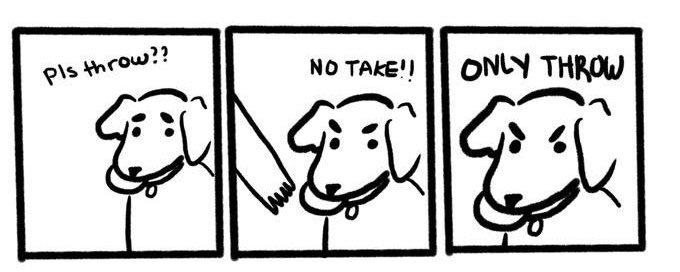
Finally, an interesting feature of hands is that if someone gives us something, we tend to reflexively hold it until we evaluate whether it’s worth holding. By default, many peoples’ mental hands do this too.
V. Future nervous systems
Humans are absolute marvels of evolution, and also seem to be in a rather awkward transition period where using our superpower causes us suffering. Perhaps in another 500,000 years evolution will have smoothed the rough edges and tamped down tanha/upādāna. What could be done more quickly?
I think this is one of the most important questions in the world and I hope to have detailed thoughts on this soon.
Footnotes
[1] What are the computational roles of vascular smooth muscle, non-vascular smooth muscle, fascia, and skeletal muscle? From Principles of Vasocomputation:
Why focus on VSMCs in particular? Three reasons: (1) they have the best physical access to neurons, (2) they regulate bloodflow, and (3) they have the latch-bridge mechanism. I.e. skeletal, non-VSMC smooth muscle, and fascia all likely contribute significantly to distributed stress minimization, and perhaps do so via similar principles/heuristics, but VSMCs seem to be the only muscle with means, motive, and opportunity to finely puppet the neural system, and I believe are indispensably integrated with its moment-by-moment operation in more ways than are other contractive cells.
I hope to describe what classes of sensation/computation each contractile tissue can stabilize in a future piece. Most generally, I think contractions “stabilize local compute” (perhaps partly by acetylating microtubules) and contractile tissues differ on their access to & instantiation of this compute, and the resolution, speed, geometry, & metabolic efficiency of contraction.
Here’s o3 on select attributes of various contractile tissues:
I’d suggest approaching this mostly as an intuition pump; my confidence in this as ground-truth is low and in particular I expect substantial diversity in types & durations of vascular latches (e.g. defended/refreshed/part of a latch complex vs undefended/singular).
[2] I’m grateful to Ethan Kuntz for a stimulating discussion on working memory & pointing to the ‘4 slots of working memory’ literature.
Acknowledgements
Warm appreciation to Romeo Stevens, Nick Cammarata, Anthony Markwell, and Elena Selezneva for the raw material that turned into vasocomputation, and to Justin Mares, Janine Leger & the community at Edge City, Nick Cammarata, Curran Janssens, Analogue Group, and a pseudonymous benefactor for support through this exploration.
Research context
- Johnson 2023: Principles of Vasocomputation (thread/video)
- Moore & Cao 2007: The Hemo-Neural Hypothesis
- Jacob Ford, & Deacon 2023: Cognition is entangled with metabolism: relevance for resting-state EEG-fMRI
- Murphy & Rembold 2005: The latch-bridge hypothesis of smooth muscle contraction
- Laukkonen & Slagter 2021: From many to (n)one: Meditation and the plasticity of the predictive mind @RubenLaukkonen
- Wikipedia: exaptation
- Jacobus 2024: The ROBA Hypothesis: A Thermodynamic Model of Human Violence and Language
- Cowan 2010: The Magical Mystery Four: How is Working Memory Capacity Limited, and Why? (but see also Oberauer 2019)
- Lieberman 2024: A New Map of Human Experience @xercyn
Originally posted on X/Twitter: Hands & the origin of samsara.